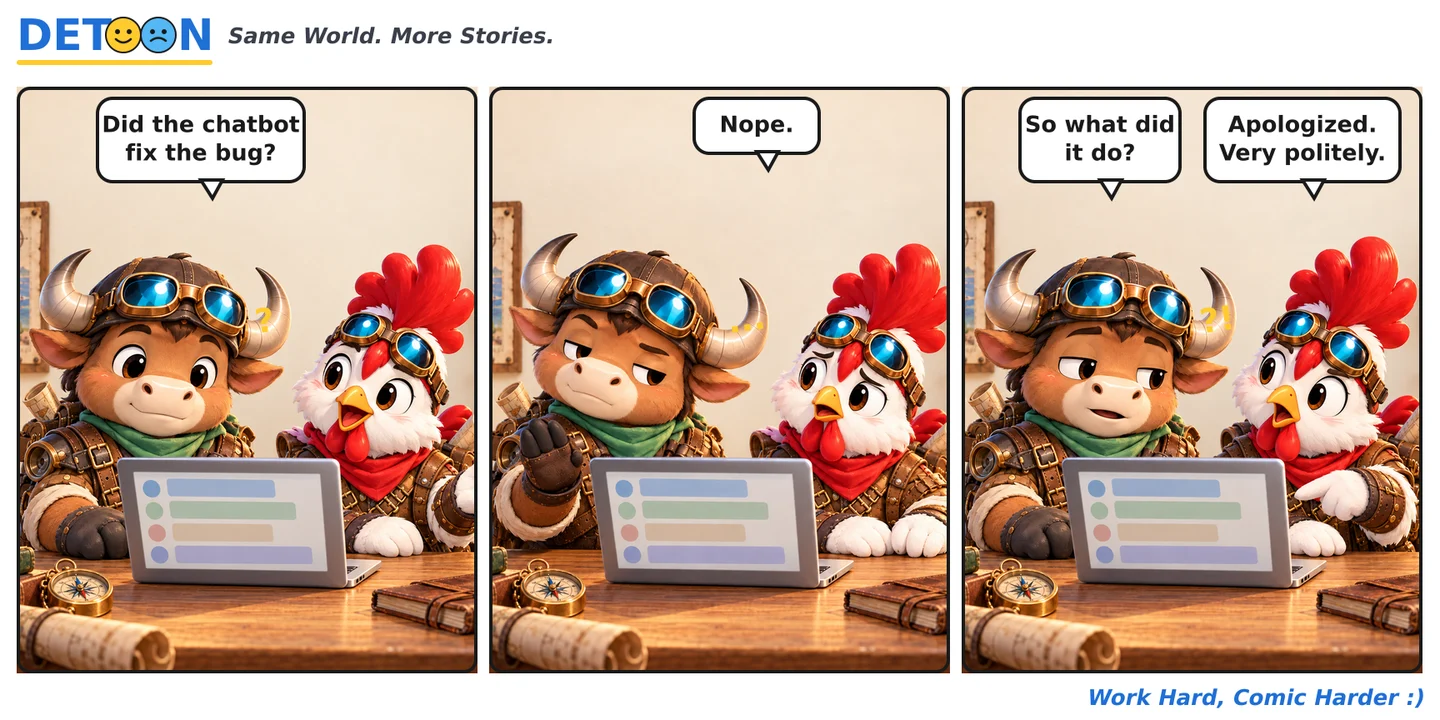
You point out the error, the chatbot apologizes very politely — then makes the same mistake. Why?
Why does it apologize and still get it wrong?
A language model generates plausible-sounding text based on word probabilities; it doesn't truly "know" right from wrong. The apology is just generated text that fits the context — it doesn't guarantee the next answer is correct. Sometimes the model is very confident while being wrong (this is called a "hallucination").
How not to be misled
- Ask for sources and cross-check important information yourself.
- Break requests into small steps and check each one.
- Don't trust figures, quotes or names you can't verify.
- For anything important, treat the AI's answer as a draft, not a conclusion.
Frequently asked questions
- Does an apology mean it understood? — Not really. It's a polite response, not proof it got it right.
- Why does it make things up? — It predicts the next word, favoring fluency over accuracy; when data is missing, it still "guesses."
- How do I reduce errors? — Give clear context, ask for sources, and always recheck important facts.
About this article: a DETOON entertainment comic with practical notes on using AI chatbots.