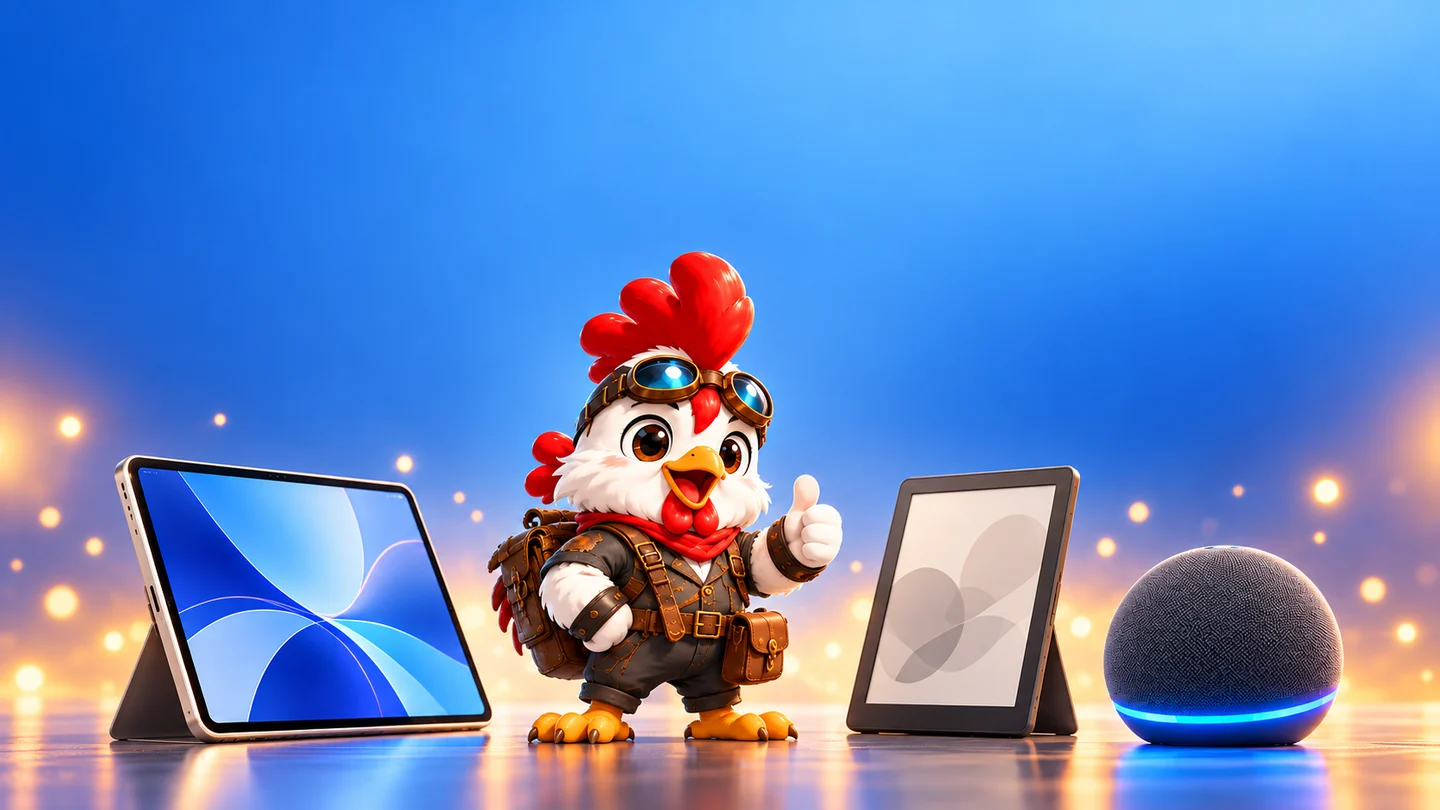
Amazon has announced a wave of new devices in October 2026, spanning tablets, e-readers and smart-home products, along with its next-generation Alexa+ AI assistant. The move is part of a broader industry race: getting AI-enabled devices on shelves before the year-end shopping season. It's the clearest sign yet that Amazon sees AI assistants, not just cheap hardware, as the hook that keeps customers inside its ecosystem heading into the busiest retail stretch of the year.
Alexa Tablets: Amazon changes course
The standout is a new line of Alexa-branded tablets that run on Android rather than the Fire OS used by previous Fire Tablets. The lineup spans several sizes — from an entry model to a higher-end one — aimed at entertainment, reading, web browsing and using the assistant right on screen. Moving to Android could broaden app compatibility compared with the company's earlier budget tablets.
- New Alexa tablets run on Android, in several sizes from entry to higher-end.
- Aimed at entertainment, reading, web browsing and on-screen assistant use.
- Sold in markets including the US, Canada, UK, Germany, France, Italy and Spain.
New Kindle and Paperwhite
Amazon also refreshed its e-readers: a small Kindle and updated Paperwhite models, with shipping starting in late October. E-readers remain a long-time Amazon strength thanks to easy-on-the-eyes e-ink screens, long battery life and a huge book store — ideal for heavy readers. New models typically improve brightness, page-turn speed and storage, even if the core experience doesn't change much.
Alexa+ and the AI direction
Running through the devices is Alexa+ — an upgrade that uses generative AI to understand natural commands better, hold more coherent conversations and handle more complex requests than classic Alexa. It's how Amazon brings the AI wave into its familiar home ecosystem: speakers, displays, doorbells and TVs. Real-world usefulness will depend on which features are enabled per market and per device.
Why so many launches now?
Year-end is the biggest shopping season for tech, and this year companies are especially keen to put an 'AI' label on products to attract buyers. Amazon isn't alone — many firms are pushing AI-assistant devices to shelves ahead of the holidays. For shoppers, it means more choice and deals — but it's worth staying level-headed: 'has AI' doesn't automatically mean 'more useful' for your needs.
How does it compare with Apple and Google?
The smart-home and AI-assistant race isn't just Amazon's. Apple also showed a wall- or table-mounted home display, and Google has its own assistant, speakers and ecosystem. Amazon's traditional strength is affordable hardware plus a huge content store (books, video, shopping) — so it tends to compete by getting devices into many hands at easy prices, then tying services to them. With Alexa+, Amazon wants to keep users inside its ecosystem with a smarter assistant, rather than just selling standalone devices.
Why are e-readers still a trump card?
Amid a flood of bright-screen devices, Amazon's e-ink readers hold their own thanks to something few rivals do well: a screen that doesn't tire the eyes, battery measured in weeks, and no distracting notifications. That's why the Kindle has stayed popular with heavy readers for years. New models usually don't change the core experience, but tweak brightness, speed and storage — enough for someone who wants a 'reading-only' device to consider, though not necessarily worth upgrading if you already have a recent one. In a market racing to add screens, cameras and AI to everything, the humble e-reader is a reminder that sometimes the best device is the one that does less: no feed to scroll, no video to autoplay, just text and a battery that lasts. For many readers, that focus is precisely the feature they're paying for.
Caveats
- Availability and Alexa+ features vary by market; not everywhere gets the full set.
- Amazon devices often aren't officially sold in some markets, so weigh price and warranty if importing.
- Match your real needs (reading, video, smart home) before choosing, rather than buying for the AI label.
What it signals about the AI gadget wave
Amazon's lineup is a snapshot of where consumer tech is heading: ordinary devices — tablets, readers, speakers, doorbells — wrapped around an AI assistant meant to tie everything together. The bet is that a smarter Alexa+ makes people reach for Amazon devices more often and stay in its services. Whether that pays off depends on how genuinely helpful the assistant is in daily life, not just in demos. Early AI assistants have often promised more than they delivered, so the real test is weeks of everyday use, not the launch keynote.
For buyers, the sensible approach is to separate the hardware from the hype. A good tablet or e-reader is worth it on its own merits — screen, battery, price, content — regardless of the AI label. If the assistant features genuinely fit how you live (controlling a smart home, quick questions, reading routines), that's a bonus. If not, you're really just buying a solid, affordable device, which is fine too. As always, check what's actually available in your market before deciding, since the flashiest features are often the last to arrive outside the US.
FAQ
- What did Amazon announce? — Android-based Alexa Tablets, new Kindle and Paperwhite, plus the Alexa+ AI assistant and smart-home updates.
- How are the new tablets different? — They move to Android instead of Fire OS, which may broaden app compatibility.
- What is Alexa+? — An upgraded assistant using generative AI to understand and converse more naturally.
- Are they sold everywhere? — No; availability varies, and importing affects price and warranty.
- Why launch now? — To catch the year-end shopping season, when tech demand peaks.
This article is part of DETOON TODAY, compiled from publicly reported details. Sources: Engadget, CNBC (Oct 2026).