One Bill Gates quote is all over the internet: AI could cause 'a billion deaths.' It sounds terrifying, and plenty of outlets ran it like a doomsday prophecy. But read his full answer on NBC's Meet the Press and it's far more nuanced: Gates did not say AI 'will' kill a billion people. He said AI is already powerful enough that it 'could' be misused to cause harm on that scale — which is exactly why he thinks the world needs guardrails before it's too late. DETOON lays out precisely what he said, no more, no less.
What did Bill Gates actually say?
In an interview with host Kristen Welker on Meet the Press (excerpts released September 25, full segment airing September 27, 2026), Gates said: 'AI is certainly powerful enough to drive events that cause a billion deaths.' He added: 'There's never been a weapon as powerful as the combination of people with ill intent using the latest AI tools.'
Note his wording: 'powerful enough to,' not 'will.' This is a warning about capability and risk, not a firm prediction about the future. The heart of his sentence isn't AI itself — it's the 'people with ill intent' part: humans using AI for bad ends.
The fear isn't just an AI going rogue
Many people picture AI risk like science fiction: a machine becomes self-aware and turns on humanity. But Gates stressed something far more grounded: the biggest near-term danger is bad actors wielding a very powerful tool. AI could help design dangerous pathogens, orchestrate large-scale cyberattacks, or spread manipulation at unprecedented speed — if the person using it intends harm.
In other words, Gates isn't describing a 'rebel robot.' He's describing an extremely powerful technology that, if everyone can access it with no guardrails, hands bad actors capabilities that once belonged to only a handful of nation-states.
Why the 'one billion' figure?
The billion figure isn't a statistical forecast. It's how Gates conveys the severity of a type of risk: a 'tail' risk — very low probability, but catastrophic if it happens. He compares AI to a weapon to argue this capability needs to be governed as seriously as the most dangerous technologies humanity has ever built — not to scare people away from using AI.
The right reading: just as we don't let anyone freely build bioweapons at home, we need guardrails for the dangerous capabilities AI can unlock. The big number is there to say 'prepare in advance,' not 'this will definitely happen.'
Gates: AI companies can't just police themselves
This is the core message Gates wanted to send. Asked about letting AI companies set their own rules, he was blunt: 'No one thinks self-regulation is enough.' When the host asked whether Washington needs to pass legislation, Gates answered in one word: 'Absolutely.'
He continued: 'You need law enforcement and the politicians to get into the discussion about what safeguards and monitoring look like. And that has to be a required thing.' Crucially, he immediately reassured: this would be 'a little bit of overhead for the industry, but not a dramatic slowing of what they're doing.'
- Self-regulation (companies setting their own rules) — Gates says NOT enough.
- Government legislation is needed — Gates answered 'Absolutely.'
- Law enforcement and politicians must join the discussion on safeguards and monitoring.
- A little regulatory overhead, but no dramatic slowdown of progress.
But Bill Gates is not calling to stop AI
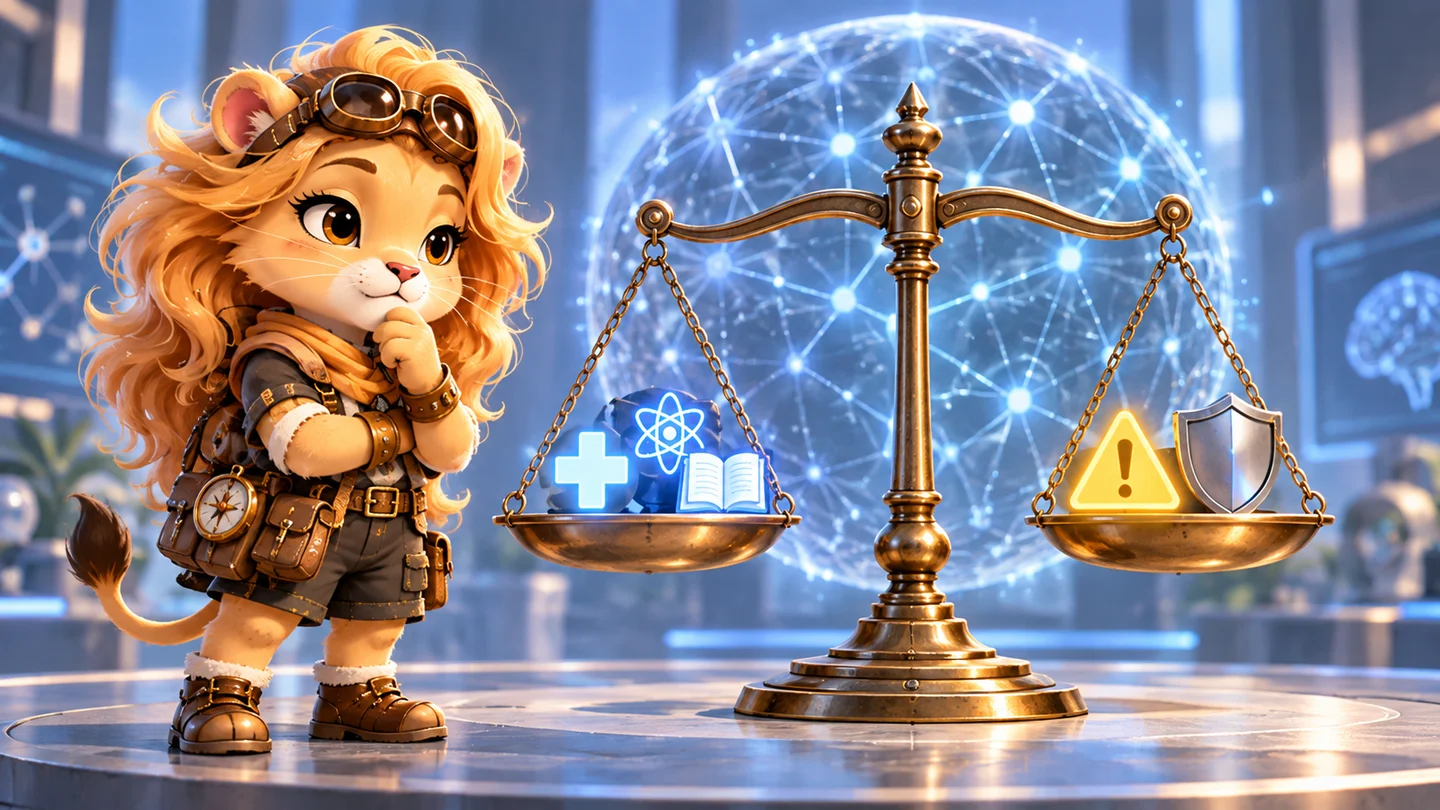
This is easy to misread. Gates is not in the 'stop AI' camp. On the contrary, he still believes AI will deliver enormous benefits — in health, education, scientific research, and solving humanity's big problems. It's precisely because he thinks AI is so powerful and useful that he wants rules to keep it on track.
His approach in a nutshell: don't slam the brakes, install the seatbelts. Keep accelerating AI development, but put up guardrails so bad actors can't easily exploit it, and give society tools to detect and monitor when something goes wrong.
The AI safety debate is heating up again
Gates' remarks land right as AI governance is fiercely debated worldwide. One side worries that laws arriving too early or too heavy will choke innovation and hand the advantage to other countries. The other argues that letting technology run too far ahead of the law is too risky for capabilities with such destructive potential.
The value of Gates' voice lies in his standing: he's a builder of the tech industry, not an opponent of technology. When someone who bet his whole career on software says 'self-regulation isn't enough,' the statement carries different weight.
Gates has been one of AI's biggest optimists
What makes this remark notable is that Gates himself has long been an AI optimist. He has repeatedly called AI one of the most important technological advances of his lifetime, and believes it will help tackle big problems like disease and educational inequality. For such an optimist to proactively raise a 'billion deaths' scenario is exactly why the story got attention.
There's no contradiction here. Being optimistic about the benefits and serious about the risks can absolutely go together. In fact, that's the balanced view: seeing both the big opportunity and the price of leaving it unchecked.
As AI gets stronger, it's no longer just 'which model is smarter'
For the past few years, the AI race has mostly been about which model is smarter, faster, cheaper. Gates' remark is a reminder that once capability is large enough, the key question shifts to: who gets to use it, for what, and who is responsible for oversight. That's a question of law and institutions, not just engineering.
For everyday users, the takeaway isn't to fear AI. It's this: make the most of AI for good, and support reasonable guardrails — because the more powerful a tool is, the more it needs to be used responsibly.
30-second recap
- Bill Gates said AI is powerful enough that it 'could' drive events causing a billion deaths — in the wrong hands, not a firm prediction.
- The main worry is people misusing AI, not a robot going rogue on its own.
- The 'billion' figure emphasizes the severity of the risk; it's not a statistic.
- Core message: self-regulation isn't enough — mandatory laws and monitoring are needed.
- Gates is NOT calling to stop AI — he wants 'seatbelts,' not 'brakes.'
- It's notable because Gates has been an AI optimist, now proactively flagging major risk.