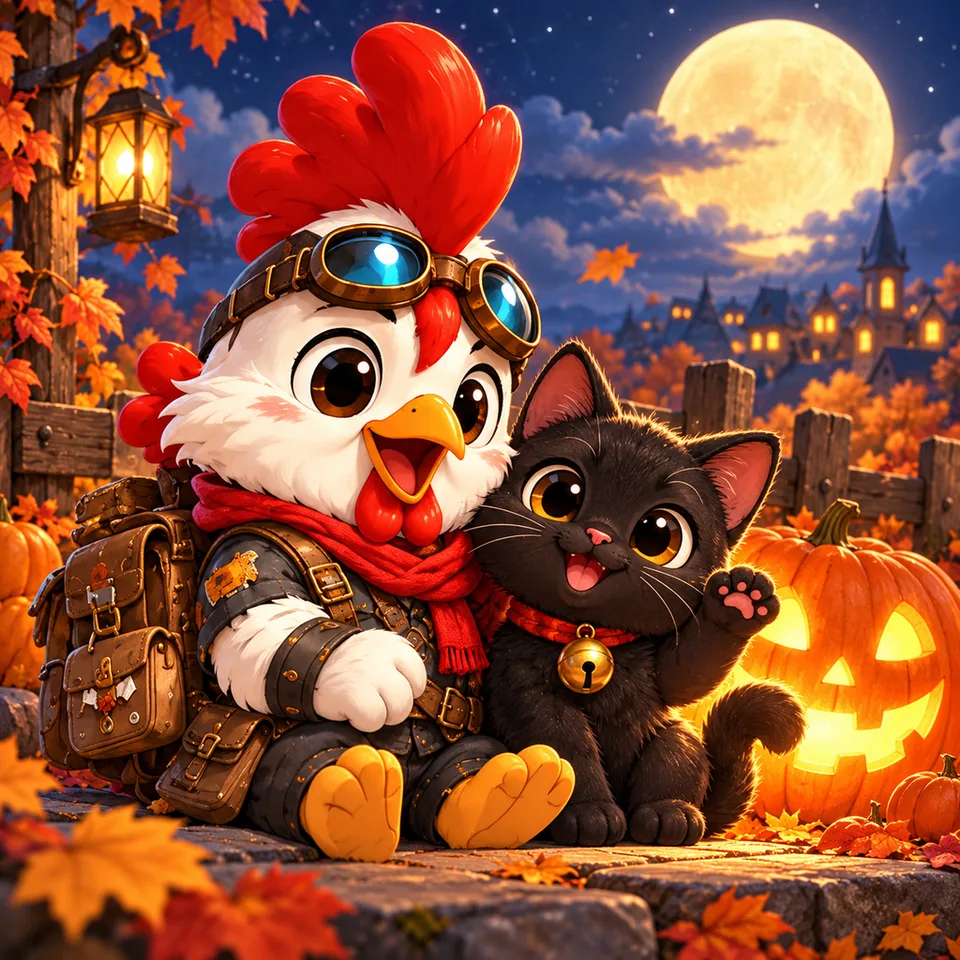
Black cats often appear beside witches, pumpkins and haunted houses during Halloween. In some cultures, meeting a black cat is believed to be bad luck; in others, the black cat is a symbol of luck, prosperity and protection. Why does the same animal carry two opposite meanings?
The black cat and a fear that is centuries old
At Halloween, many picture a broom-riding witch, a dark castle and a black cat at the window — an image so familiar the black cat has almost become the festival's mascot. But black cats were not always tied to bad luck. Through history, human attitudes toward cats varied greatly by era and region: some places cherished them for catching mice and guarding grain; others placed them in myth or linked them to supernatural forces. That difference helps explain why a black cat can be both feared and seen as a good omen.
Why are black cats thought to bring bad luck?
Part of the negative view in Europe stems from medieval folk belief, when black cats were linked to witches and magic. People once believed witches kept cats as helpful familiars, or even shape-shifted into cats — beliefs that helped build the image of the mysterious, frightening black cat. According to the Library of Congress, the link between black cats, witches and Halloween formed from superstitions carried over many centuries. Of course, this is the history of human belief, not scientific evidence that black cats bring misfortune: like any cat, a black cat's behavior and temperament are shaped by genetics, environment and care.
Why does the color black suggest mystery?
In many cultures, darkness is linked to the unknown. Before modern lighting, night was when people could hardly observe their surroundings, and sudden sounds or shadows easily caused unease. A cat with black fur, light-reflecting eyes and near-silent movement easily became a character in folk tales. But that does not mean people are born fearing black cats — how we view colors and animals depends heavily on culture, experience and the stories handed down.
Why do some places see black cats as lucky?
Interestingly, black cats are not negative everywhere. In some Scottish traditions, a stray black cat appearing at your door is taken as a sign of coming prosperity. In England, black cats are sometimes considered a good omen, especially in stories about love and marriage. In Japan, cats hold a prominent place in luck culture: the maneki-neko (lucky cat) figurine comes in many colors, and the black version is sometimes linked to protection and warding off misfortune. These readings differ by region, but all show that a black cat's meaning is shaped by culture — not that fur color decides a person's fate.
Are black cats really connected to witches?
In popular culture, witches and black cats often go together — from illustrations and fairy tales to cartoons and video games. But the pairing is mainly a product of folk history and artistic imagery, with no scientific basis for claiming black cats can commune with the supernatural. Today, many works turn the black cat into a clever, adorable or funny character, so a symbol once tied to fear can also inspire cheerful stories.
Is there anything biologically different about black cats?
Black fur mainly relates to the pigment melanin and genetic factors affecting coat color. Some cats are solid black, while others show faint brown tints or patterns hard to see in ordinary light. Coat color is not a reliable basis for predicting whether a cat is friendly, aggressive, smart or “lucky” — a cat's personality depends on individual traits, socialization and environment. Judging a cat by its fur color easily leads to needless prejudice.
Are black cats harder to adopt?
This question often comes up in animal-welfare campaigns. Some rescues have noted that black cats may be overlooked during adoption, but the effect varies across shelters and studies: the number of black cats on hand, how they are photographed, their age, health and more can all affect how long they wait for a home. So one should not claim all black cats are hard to adopt just because of color. What is certain is that fur color does not decide an animal's worth; when adopting, focus on health, temperament, care conditions and the ability to bond long term.
Why are black cats still a Halloween symbol?
Modern Halloween uses many images rooted in European folk tradition, and the black cat is one of them. Dark fur, graceful movement and a historical link to witch tales make the black cat an instantly recognizable figure — often placed beside a full moon, a fence, a haunted house or a witch's hat to set a mysterious mood with no long explanation needed. Yet modern portrayals keep growing more varied: a black cat can be scary in a horror film, but utterly adorable in a comic or a funny video. That flexibility keeps black cats appearing in popular culture.
Frequently asked questions
- Is a black cat crossing your path bad luck? — There is no scientific evidence; it is a folk belief, and explanations differ across cultures.
- Why do witches often have black cats? — The image comes from European folk belief about witches and animal familiars, later spread through literature, art and film.
- Do black cats bring good luck? — In some traditions (Scotland, England, Japan) yes; but this is cultural belief, not a scientifically proven power.
- Are black cats smarter than other cats? — There is no basis to conclude that from fur color alone.
- Why does Halloween often feature black cats? — Because black cats have long been tied to witch tales and the uncanny in Western folk tradition.
The black cat is a fascinating example of how people assign very different meanings to the same thing: a bad omen in one place, luck and protection in another. But to the cat itself, black fur is simply a natural trait. Perhaps the most thought-provoking part is not what black cats bring to people, but why people attach so many stories to them. And you — if a black cat crossed your path on Halloween night, would you think it a bad omen, a lucky sign, or just a cat out for a stroll?